
Critical Pedagogy
Decolonising the curriculum, inclusive education, and DEIBJ — examining whose knowledge is centred, whose voices are heard, and how schools can become genuinely just spaces.
Overview
Education is never neutral — the question is whose interests it serves
Critical pedagogy, as understood through the work of Paulo Freire, bell hooks, and decolonial scholars, asks educators to examine the assumptions embedded in what they teach, how they teach it, and who gets to succeed in their classrooms. It is not a subject — it is a stance towards every subject.
This section brings together three interconnected commitments: decolonising the curriculum, building genuinely inclusive schools, and embedding diversity, equity, inclusion, belonging, and justice as living practices — not policy checkboxes.
Scholars who shape this work
Bell Hooks
Teaching to Transgress (1994)
Paulo Friere
Pedagogy of the Oppressed (1968)
Ngũgĩ wa Thiong’o
Decolonising the Mind (1986)
Bettina Love
We Want to Do More Than Survive (2019)
Walter Mignolo
Local Histories/Global Designs (2000)
Subcategories
Three areas within critical pedagogy
These are not separate conversations — they are dimensions of the same commitment to building schools that are honest, just, and genuinely inclusive.
Dcolonising the Curriculum
Critically auditing what we teach, whose knowledge is centred, and how to build a curriculum that reflects the full diversity of human experience — particularly in IB and international school contexts across Africa and Europe.
Inclusive Education
Universal Design for Learning and building classrooms where every learner genuinely belongs — not just participates. Inclusion as a stance, not a strategy.
DEIBJ in Schools
Diversity, equity, inclusion, belonging, and justice as living commitments — from policy design to daily classroom practice, and the pastoral relationships that make belonging real.
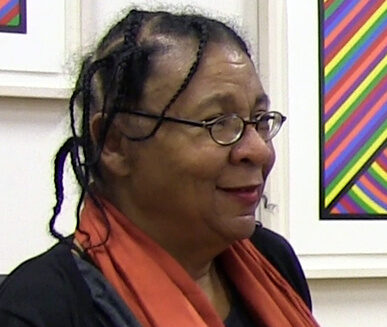
Teaching to Transgress: Education as the Practice of Freedom (1994)
“The classroom remains the most radical space of possibility in the academy.”
Bell Hooks argued that education is never neutral — it either domesticates or liberates. Her vision of engaged pedagogy, where the classroom becomes a site of critical consciousness, belonging, and resistance, sits at the heart of this work.

Decolonising in practice
What decolonising a school curriculum actually looks like
The term is everywhere — but what does it mean in a scheme of work, a reading list, or an assessment? This section moves beyond the buzzword to practical curriculum auditing frameworks, guidance on diverse text selection, and the courageous conversations schools need to have.
Drawing on cross-continental experience in Africa and Europe, and grounded in decolonial theory from Ngũgĩ wa Thiong’o, Mignolo, and others.
DEIBJ & belonging
Belonging is not a feeling — it is a design decision
Schools that claim to be inclusive but whose systems, practices, and curricula tell certain students they do not belong are not inclusive — they are performatively so. DEIBJ work demands we look at every structure: who is in the reading list, who gets placed in which group, who is called on, who is seen.
This section explores what genuine belonging looks like as a lived, daily experience — and how school leaders can design for it.

Free curriculum diversity audit checklist —
for departments ready to look honestly at what they teach.